
AI speaking practice for real life.
Rehearse the moments language learners actually worry about: talking to a landlord, calling in sick, ordering lunch, meeting your partner's parents, or making small talk without freezing. Now in German, Spanish, and English.
Start free: 3 conversations every day. No subscription required.
What do you want to speak?
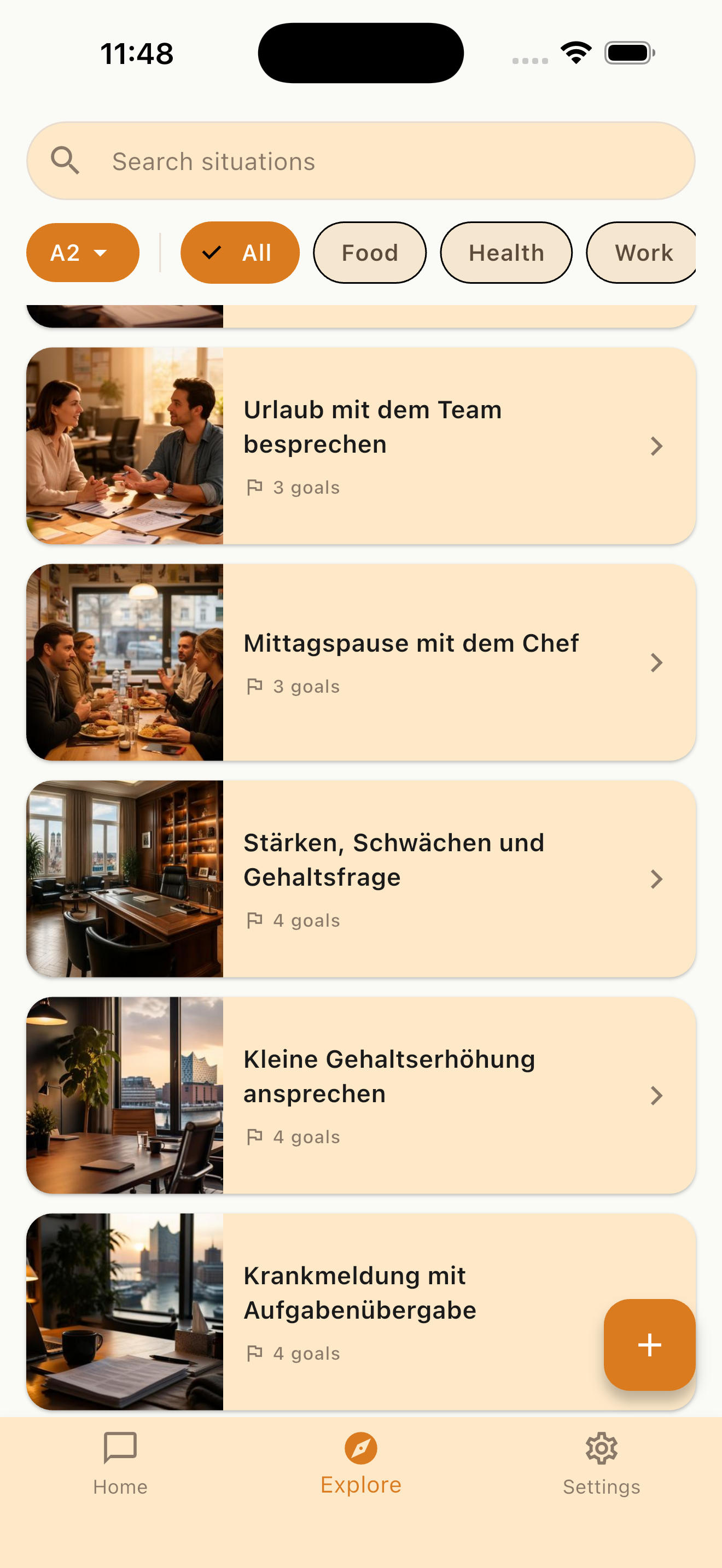
Each language has its own real-life scenes, characters, voices, and feedback. Start at your level and practice the situations that matter to you.
Practice what you need this week.
Instead of another vocabulary list, you get specific real-life situations with a role, a character, and goals. Browse by language and level, and jump into the kind of conversation you're actually likely to face.
- Work, housing, errands, travel, food, family — a growing library in German, Spanish, and English
- Filter by CEFR level (A1 → B2)
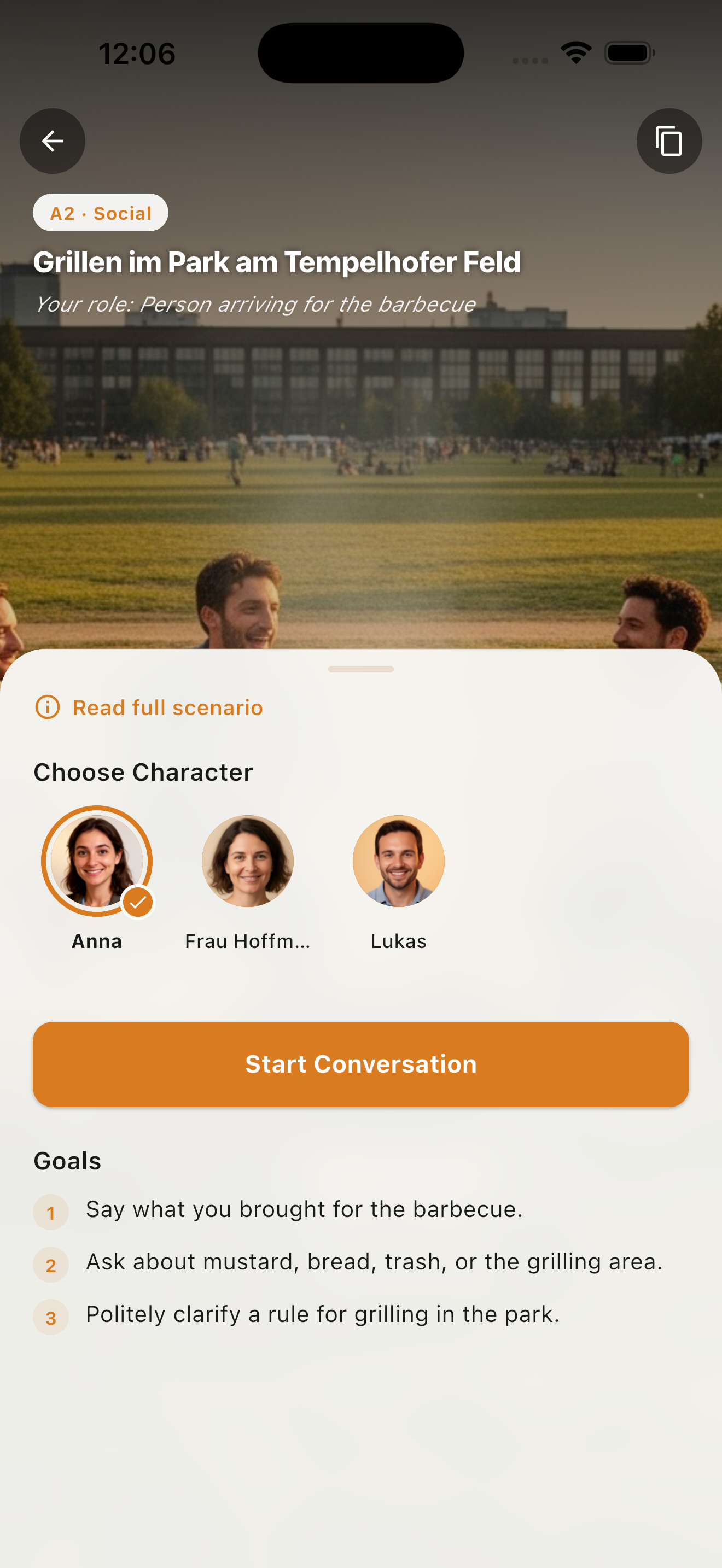
- Every scene has practical goals, not just a topic
Talk to someone who stays in the scene.
Pick a character, read your role, and start. If the first line feels hard, let the character begin. You can type when you want time to think, or speak when you want the real pressure of answering out loud.
- Live voice practice with natural AI voices, in the accent you're learning
- Text mode for slower, deliberate practice
- Hints and translations when you get stuck
Leave with something concrete to improve.
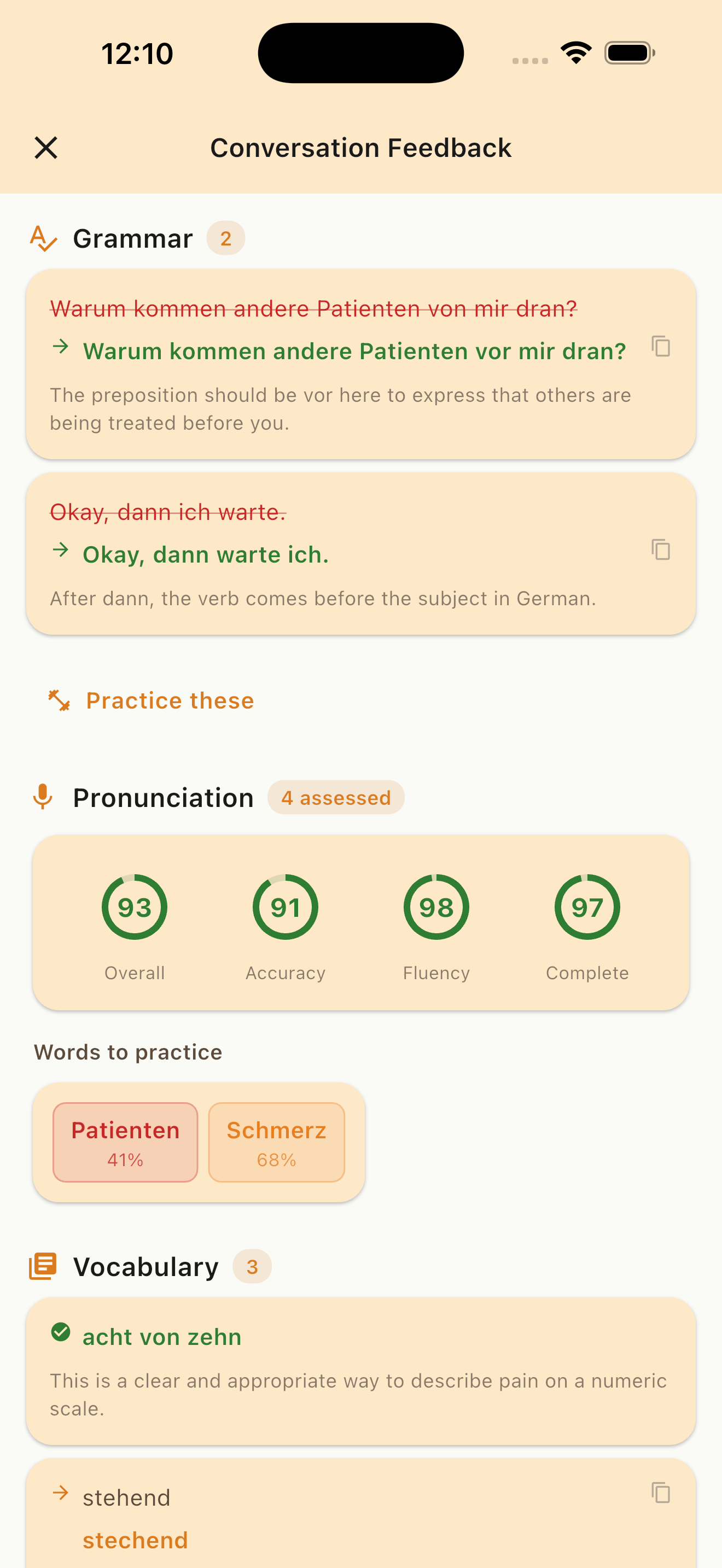
After a conversation, Tatin pulls out what's worth remembering: grammar fixes, more natural phrasing, pronunciation scores, and the words that need another pass. The goal is not a streak. It is one conversation that went better than the last one.
- Grammar corrections with a short why
- Pronunciation scores (accuracy, fluency, completeness)
- Words to practice — the ones you actually fumbled
Most of us understand far more than we can say out loud. Tatin is for closing that gap — in German, Spanish, or English — one real conversation at a time.